
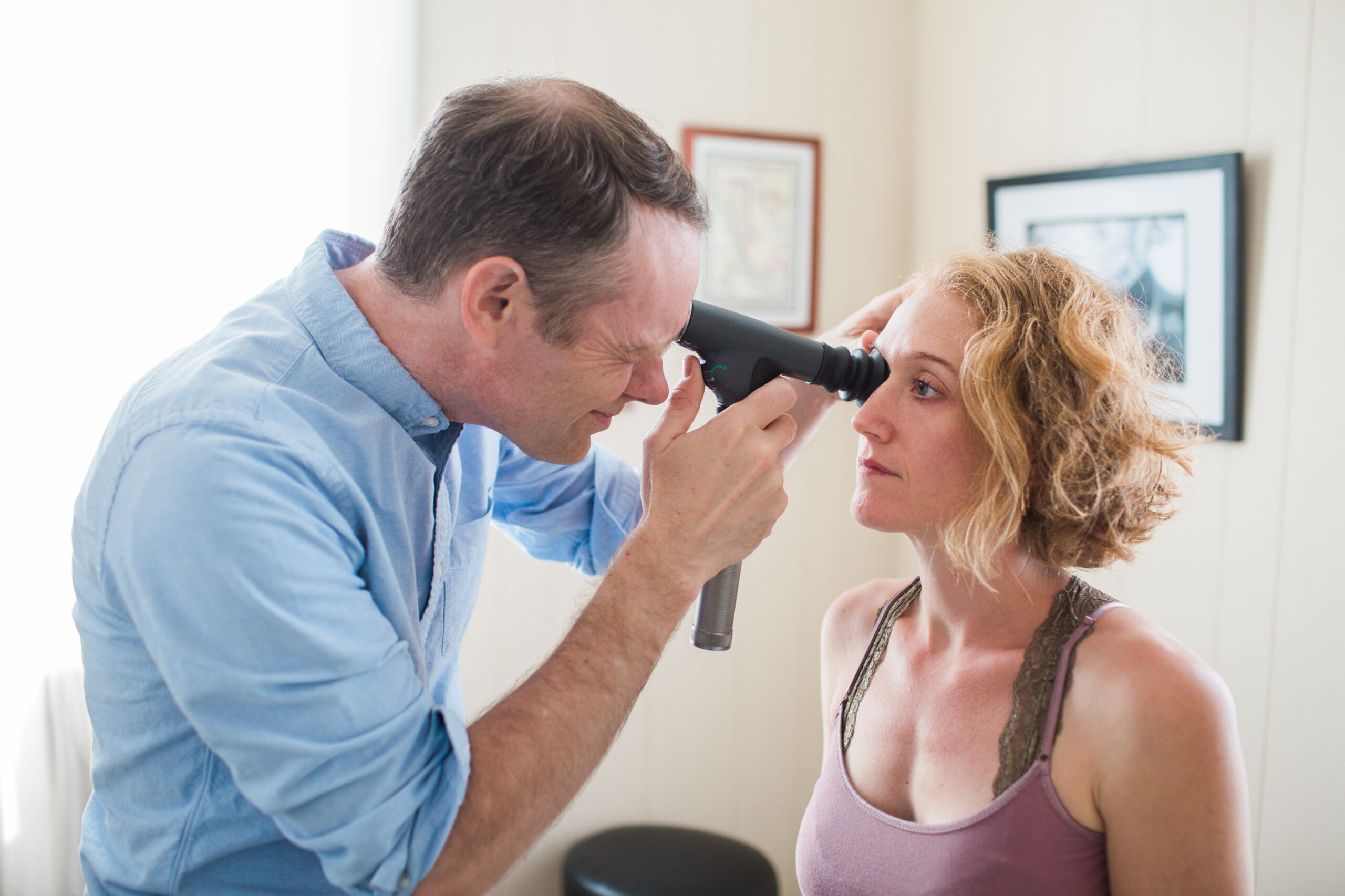
How Western medicine and acupuncture can work together to protect vision
A diagnosis like glaucoma, macular degeneration, retinitis pigmentosa, or anterior ischemic optic neuropathy (AION) is shocking, to say the least. Most patients feel hopeless based on their diagnosis. But new research and Traditional Chinese Medicine show there may be more to the story and more hope in many cases.
In short: Acupuncture and integrative care do not replace conventional ophthalmology, but they can support eye health by improving circulation, regulating the nervous system, and supporting the metabolic environment of the retina and optic nerve. Many patients use this approach alongside standard treatment to help slow progression and support visual function.
Over the past two decades, research confirms what Traditional Chinese Medicine has been saying for over a thousand years:
Degenerative eye disease is not just an “eye problem.” The retina and optic nerve are living neural tissue. Their health depends on circulation, mitochondrial energy production, immune balance, metabolic stability, and nervous system regulation. The eyes are fueled by many body systems, thus treatment requires a holistic approach.
In the classic Chinese medicine book, written about 2100 years ago, Huangdi Neijing, Ling Shu, states: “The essence and qi of all of the internal organs ascend and pour into the eyes, thereby producing their visual essence/brightness.”
At Russell Family Acupuncture in Petaluma, we use an integrative model of eye care that supports the entire visual system — not just the eye itself.
Combining:
- Ongoing ophthalmology
- Traditional Chinese Medicine (TCM)
- Acupuncture and electroacupuncture
- Functional medicine principles
- Nutrition and lifestyle support
We often find that patients in earlier stages of disease respond more noticeably, particularly when circulation and stress-related patterns are addressed early.
Degenerative eye disease is a whole-body issue
Whether we’re talking about glaucoma, macular degeneration, or optic nerve damage, several underlying mechanisms often overlap:
- Gradual loss of retinal cells, including retinal ganglion cells, and/or optic nerve tissues
- Reduced microcirculation, oxygen delivery, and impaired optic nerve perfusion
- Mitochondrial dysfunction (energy failure inside cells)
- Oxidative stress and chronic inflammation
- Age-related vulnerability of neural tissue
The eye is an extension of the brain. It is supplied by some of the smallest and most delicate blood vessels in the body. When circulation, metabolism, or nervous system balance falter, the visual system can be affected.
One pattern we frequently observe is that patients with vascular dysregulation or chronic stress often experience more fluctuation in visual symptoms.
This is one reason an integrative approach makes sense, especially in chronic, progressive conditions, because acupuncture can address these systems.
The Eye is an Extension of the Brain
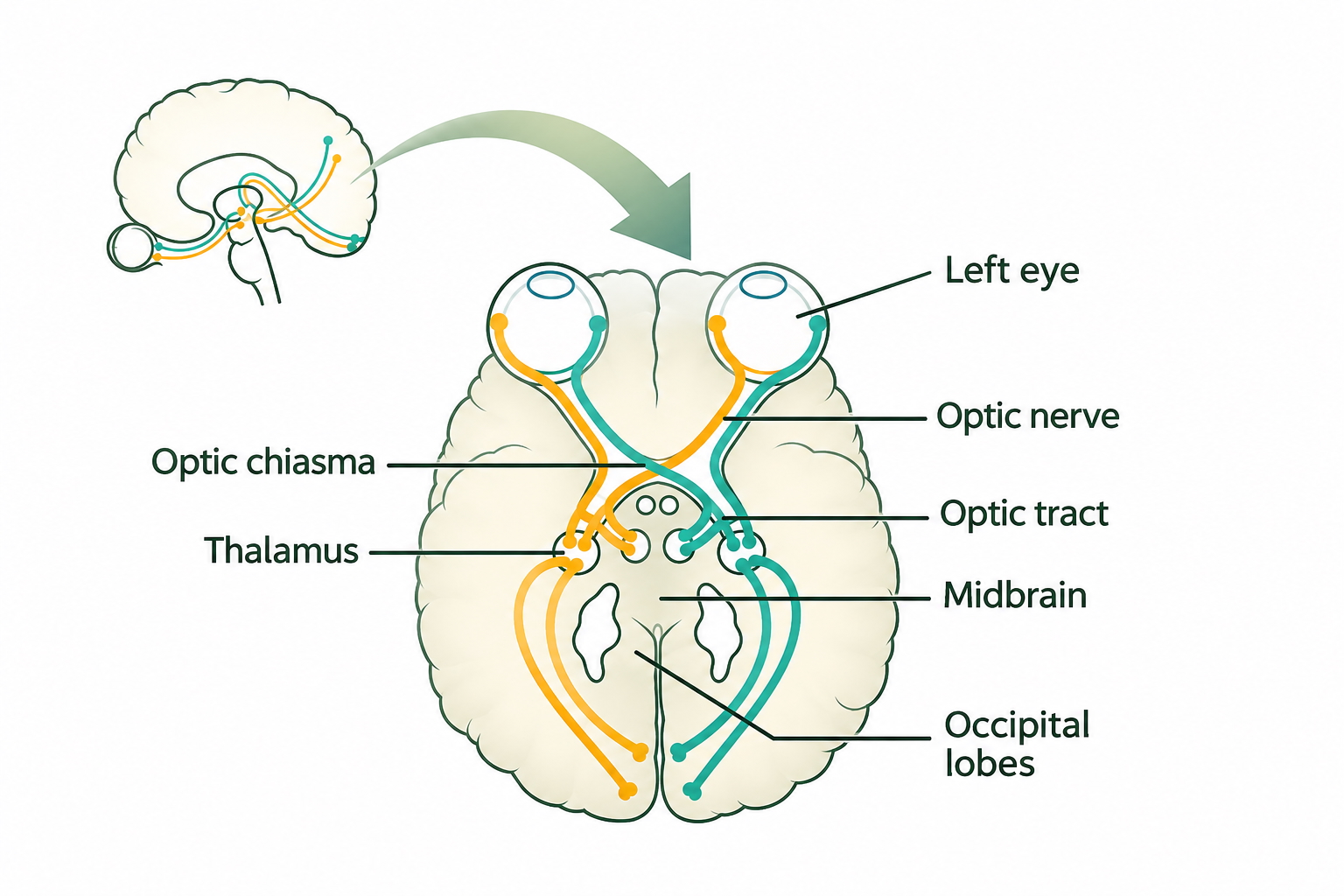
The retina and optic nerve connect the eye directly to the brain and depend on healthy circulation, metabolism, and nervous system regulation.
Looking for patterns of imbalance in the body to help eye diseases
Traditional Chinese Medicine (TCM) has approached eye disease for thousands of years, through a different lens. For eye conditions, Traditional Chinese Medicine looks at patterns, not just diagnoses, because the body systems are all connected.
Rather than focusing solely on the diagnostic label, Chinese medicine looks at patterns of imbalance in the whole person. In classical theory, the eyes are closely connected to:
- The Liver system (circulation and nourishment of the eyes)
- The Kidney system (aging, vitality, neural integrity)
- Blood and Yin (moisture and structural support)
- Smooth flow of Qi (functional circulation)
Two patients with the same ophthalmologic diagnosis may have entirely different constitutional patterns, which means the treatment for each should differ for each person’s unique body.
This is where individualized acupuncture and herbal medicine become powerful.
Here are some of the tools we use in our holistic eye clinic:
1. Acupuncture & Electroacupuncture for Eye Health
Most people think of acupuncture for pain. But its effects are much broader.
Research suggests acupuncture may influence:
- Neurovascular regulation [1]
- Autonomic nervous system balance [2, 3]
- Microcirculation [4]
- Inflammatory signaling [5]
- Stress-related vascular constriction [6]
These systems and flows are critical for the health of the eyes.
Electroacupuncture, another tool, adds gentle electrical stimulation, which further supports neural signaling and circulation. This is particularly relevant in optic nerve and retinal conditions, where neuroprotection and circulation are both important.
Treatment is always adapted to the individual: diagnosis, stage of disease, medications, and constitution all matter. And no needles ever go in the eyes.
Acupuncture for eye health

Acupuncture may support circulation and nervous system regulation.
2. Herbal Medicine for Eye Health
Both Chinese herbal formulas and Western botanical medicine can support systemic factors that influence eye health.
Rather than acting as simple “eye tonics,” these traditions focus on:
- Supporting circulation
- Reducing oxidative stress
- Modulating inflammation
- Enhancing mitochondrial resilience
- Supporting nervous system health
Chinese formulas are built around synergy and balance. Western herbs often emphasize vascular and antioxidant properties. When thoughtfully combined and coordinated with medical care, they can complement conventional treatment.
Safety and communication with your physician always remain a priority.
3. Functional Medicine & Targeted Nutrition for Degenerative Eye Diseases
Retinal and optic nerve cells are metabolically demanding and depend on a stable internal environment to support long-term neuroprotection. Functional medicine looks at the biochemical environment that supports these cells.
This may include evaluating:
- Mitochondrial support
- Antioxidant status
- Vascular health
- Metabolic markers
- Inflammatory burden
More supplements are not always better. And individualized dosing and coordination with existing treatment plans are key factors we consider.
4. Qi Gong & Vision-Supportive Self-Care Strengthen the Body and Eyes
We often suggest patients start gentle practices such as Qi Gong and guided breathing that can support:
- Nervous system regulation
- Postural alignment
- Stress reduction
- Circulatory efficiency
These practices don’t “cure” degenerative eye disease, but they can help support nervous system regulation and in turn, vascular and circulatory health. Additionally, they often help patients feel more grounded and proactive in their care.
Chronic conditions unfold over years, so sustainable self-care is important.
5. A Collaborative Model for Glaucoma, Macular Degeneration & More
At the same time, modern ophthalmology is essential.
Advanced imaging, visual field testing, intraocular pressure regulation and management, anti-VEGF injections, medications, and surgery are critical tools for:
- Slowing progression
- Preventing sudden vision loss
- Monitoring structural change
- Managing risk
Integrative care does not replace ophthalmology. It complements it.
At Russell Family Acupuncture, we encourage every patient to maintain regular care with their eye specialist. Our work is supportive and collaborative with your medical doctor.
The most effective approach for degenerative eye disease is a layered approach:
- Ophthalmology for structural management
- Acupuncture for neurovascular balance
- Herbal and nutritional support for cellular health
- Lifestyle practices for long-term resilience
Diagram showing an integrative approach to degenerative eye disease care.
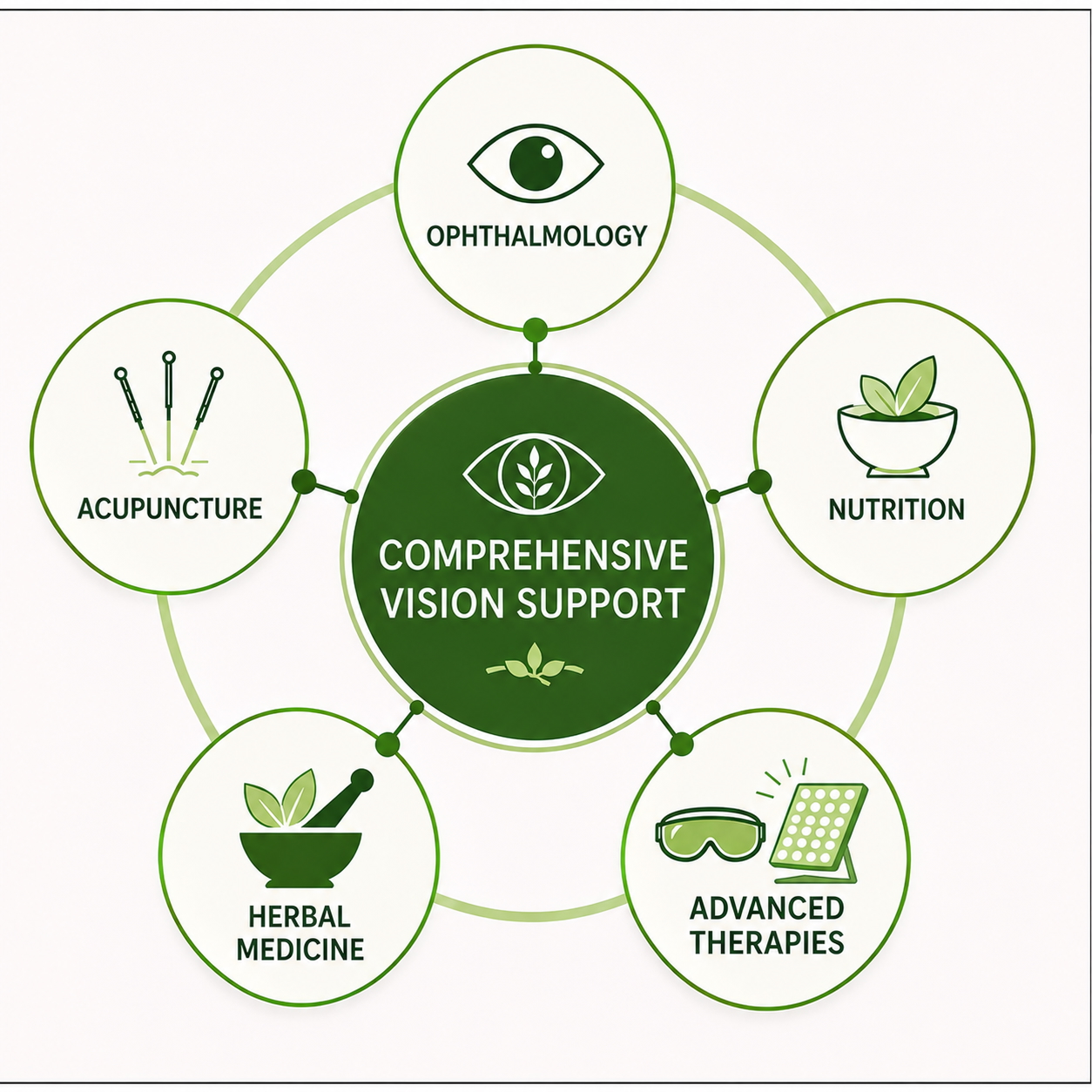
Integrative care combines multiple strategies to support visual health.
Key Takeaways
-
Degenerative eye disease involves the brain, circulation, and nervous system, not just the eye
-
Ophthalmology remains essential for diagnosis and disease management
-
Acupuncture supports microcirculation, nervous system balance, and neurovascular function
-
A layered, integrative approach often provides the most comprehensive support
Looking Ahead
In future posts, we’ll take a deeper look at:
- Integrative strategies for glaucoma
- Retinal support in macular degeneration
- Low blood flow and optic nerve health
- Evidence-based supplements for neuroprotection
- Acupuncture strategies for degenerative eye disease
If you’ve recently received an eye diagnosis or if you’re looking for additional support alongside your ophthalmologist, it may be helpful to explore whether an integrative approach fits your goals.
At Russell Family Acupuncture in Petaluma, we work with patients throughout Sonoma and Marin Counties who are navigating glaucoma, macular degeneration, retinitis pigmentosa, and ischemic optic conditions. We focus on thoughtful, steady support to the whole body as they feed the eyes.
Contact us at (707) 773-3375. We’re happy to answer questions and see whether this model feels appropriate for you.
David Russell, L.Ac, is a licensed acupuncturist and herbalist, with a Master’s degree in Traditional Chinese Medicine and postgraduate studies in Hangzhou, China. Inspired to holistically heal vision conditions, David Russell studied under the nationally acclaimed Dr. Andy Rosenfarb. Now David brings to you a specialized system of acupuncture, nutrition, herbs, and functional medicine to help heal your eyes and restore the health of your body.
REFERENCES
- Jiang H, Zhang C, Lin M, Yin Y, Deng S, Liu W, Zhuo B, Tian G, Du Y, Meng Z. Deciphering the mechanistic impact of acupuncture on the neurovascular unit in acute ischemic stroke: Insights from basic research in a narrative review. Ageing Res Rev. 2024 Nov;101:102536. doi: 10.1016/j.arr.2024.102536. Epub 2024 Oct 9. PMID: 39384155.
- Ma YZ, Zhang PY, Du T, Wang ZC, Wang TD, Fu AH, Wang ZM, Ma TM, Zhang W. Clinical efficacy and safety of acupuncture in modulating autonomic nervous function: a meta-analysis of randomized controlled trials. Front Neurosci. 2025 Oct 28;19:1694110. doi: 10.3389/fnins.2025.1694110. PMID: 41230507; PMCID: PMC12602500.
- Hamvas S, Hegyi P, Kiss S, Lohner S, McQueen D, Havasi M. Acupuncture increases parasympathetic tone, modulating HRV – Systematic review and meta-analysis. Complement Ther Med. 2023 Mar;72:102905. doi: 10.1016/j.ctim.2022.102905. Epub 2022 Dec 6. PMID: 36494036.
- Takayama S, Seki T, Nakazawa T, Aizawa N, Takahashi S, Watanabe M, Izumi M, Kaneko S, Kamiya T, Matsuda A, Kikuchi A, Yambe T, Yoshizawa M, Nitta S, Yaegashi N. Short-term effects of acupuncture on open-angle glaucoma in retrobulbar circulation: additional therapy to standard medication. Evid Based Complement Alternat Med. 2011;2011:157090. doi: 10.1155/2011/157090. Epub 2011 Mar 7. PMID: 21437193; PMCID: PMC3062145.
- Lim HD, Kim MH, Lee CY, Namgung U. Anti-Inflammatory Effects of Acupuncture Stimulation via the Vagus Nerve. PLoS One. 2016 Mar 18;11(3):e0151882. doi: 10.1371/journal.pone.0151882. PMID: 26991319; PMCID: PMC4798687.
- Ye Z, Zhu L, Li XJ, Gao HY, Wang J, Wu SB, Wu ZJ, Gao HR. PC6 electroacupuncture reduces stress-induced autonomic and neuroendocrine responses in rats. Heliyon. 2023 Apr 5;9(4):e15291. doi: 10.1016/j.heliyon.2023.e15291. PMID: 37095918; PMCID: PMC10121450.