
Blog 1 in the Glaucoma Series
A whole-systems view from Western medicine, Traditional Chinese Medicine, and functional medicine.
Glaucoma is often described as a disease of high eye pressure, but there can be more factors involved.
While elevated intraocular pressure (IOP) is a major risk factor, modern research now understands glaucoma as a chronic, progressive optic nerve disease [1] involving nerve degeneration, impaired blood flow, mitochondrial stress, and inflammation.
Factors Affecting Glaucoma Beyond Eye Pressure
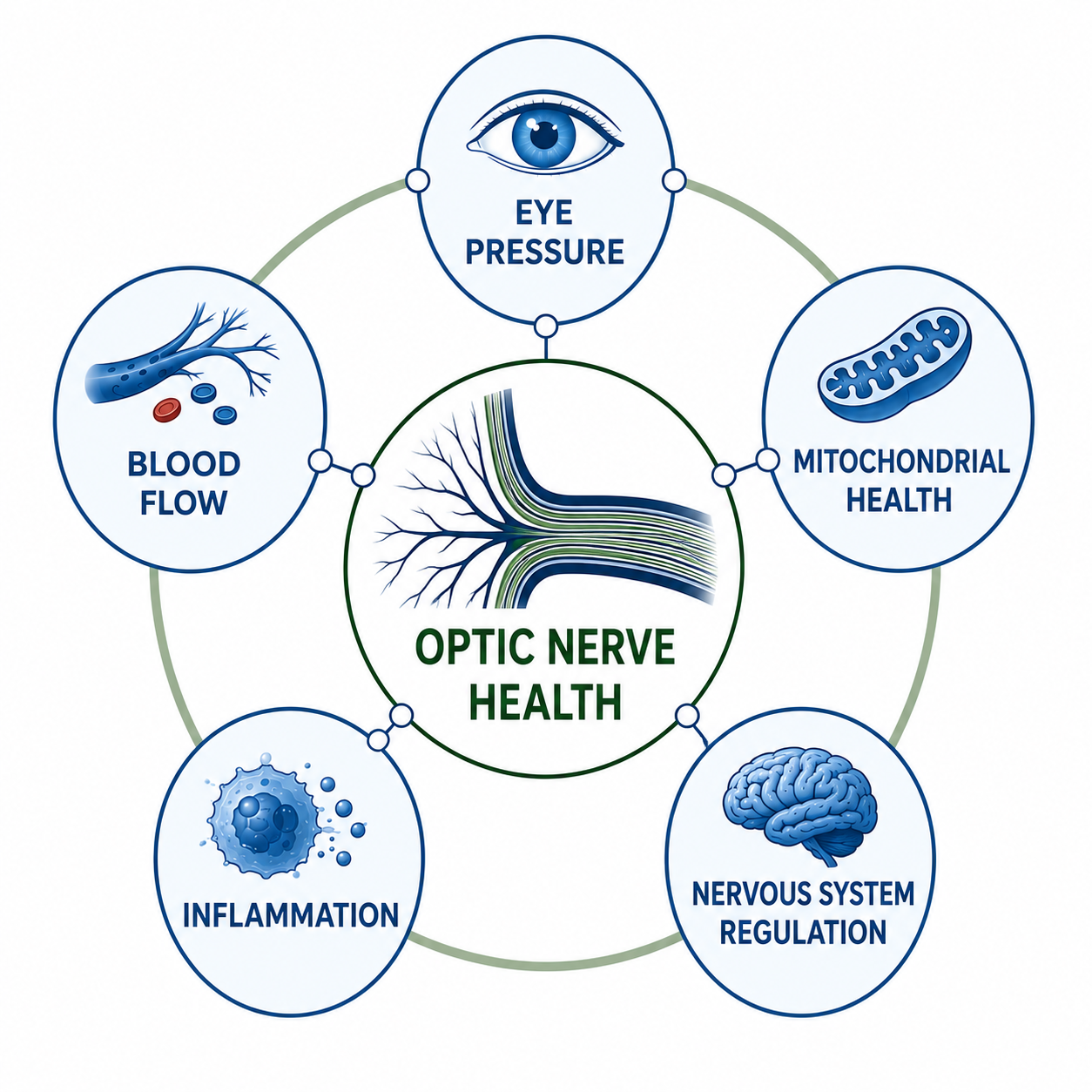
Glaucoma involves multiple factors beyond intraocular pressure alone.
This broader understanding helps explain a confusing reality many patients face:
Some people develop glaucoma even when eye pressure is “normal,” while others tolerate higher pressures without vision loss. In clinical practice, we often see this: patients with relatively “normal” pressures showing progression, while others remain stable at higher ranges.
In short: Glaucoma is not only a disease of eye pressure. It is a neurodegenerative condition affecting the optic nerve, where factors like blood flow, mitochondrial health, and nervous system regulation play a meaningful role alongside intraocular pressure.
At Russell Family Acupuncture in Petaluma, we take an integrative approach to glaucoma care and other optic nerve conditions. We work alongside your ophthalmologist to support the health of the optic nerve, circulation to the eyes and brain, and the nervous system as a whole. Our goal is to strengthen the terrain in which healing and preservation occur.
What Is Glaucoma? Beyond Eye Pressure: A Whole View of Optic Nerve Health
Eye pressure, or intraocular pressure (IOP), is the fluid pressure inside your eye. It is maintained by a delicate balance of fluid production and drainage. Keeping this pressure within a healthy range is vital for preserving the shape of the eye and protecting the optic nerve from damage.
Intraocular Pressure is an Important Factor in Glaucoma
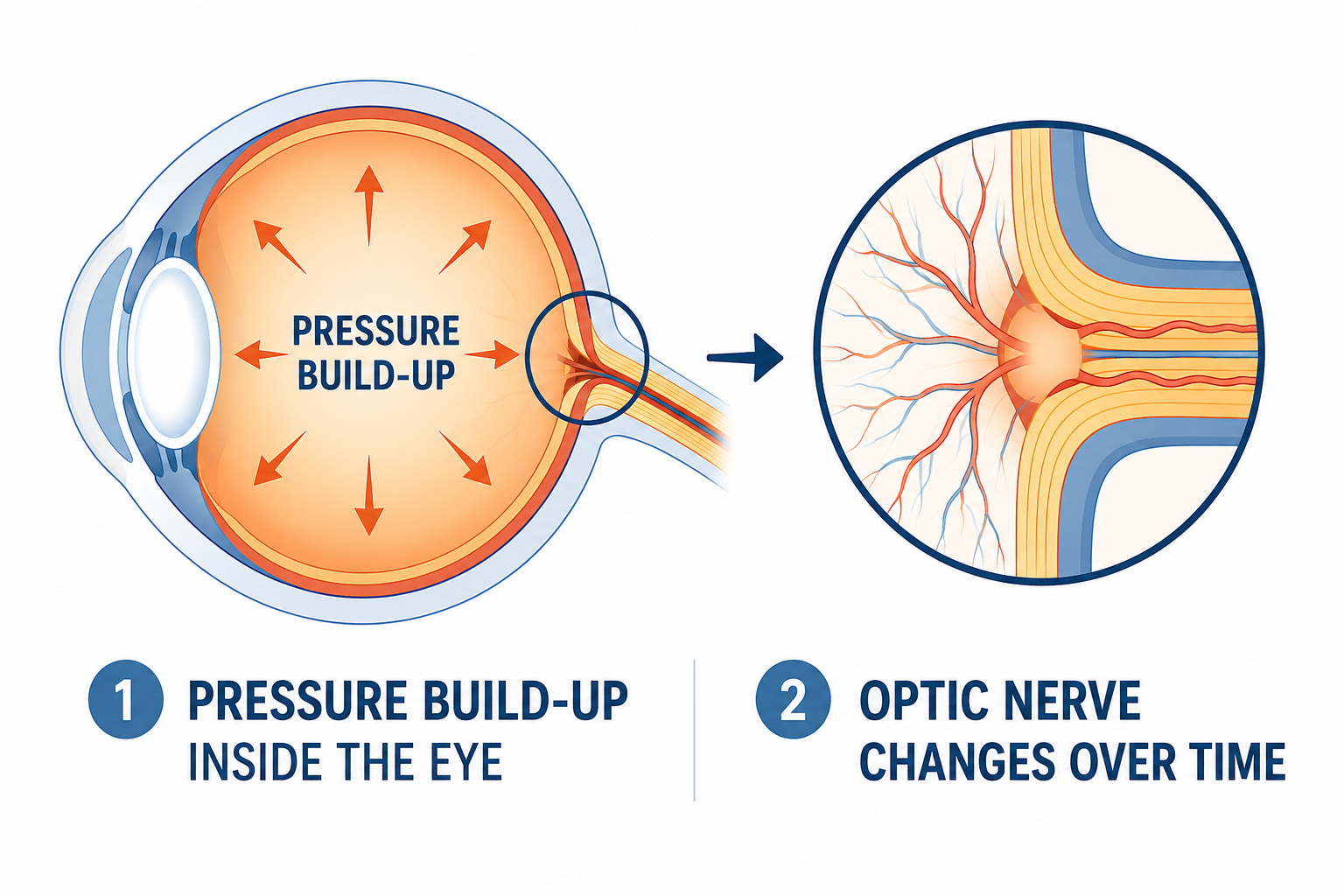
Increased intraocular pressure is one factor involved in glaucoma progression.
Increasingly, Western medicine and integrative care agree that glaucoma is a form of progressive neurodegeneration [2] affecting the optic nerve. The optic nerve is composed of over one million delicate nerve fibers called retinal ganglion cells, which transmit visual information from the eye to the brain.
Over time, these nerve fibers can become damaged due to a combination of factors, including:
When enough nerve fibers are lost, visual field defects appear—often first in peripheral vision, and later affecting central vision if the disease progresses.
Why Eye Pressure Alone Doesn’t Tell the Whole Story
Lowering eye pressure is currently the only proven way in Western medicine to slow glaucoma progression. Ophthalmologists provide eye drops, laser procedures, and surgery to lower the pressure, which can be vision-saving.
However, intraocular pressure (IOP) regulation is only one piece of a larger puzzle–and in some patients, it’s not the dominant one. In practice, this becomes especially clear in patients with normal-tension glaucoma, where pressure alone doesn’t explain what is happening.
In fact, many patients, especially those with normal-tension glaucoma, experience optic nerve damage even when pressures stay in the teens. Research suggests that in these cases, other factors play an outsized role5, including:
- Poor ocular perfusion pressure (insufficient blood flow to the optic nerve)
- Low blood pressure, especially at night
- Oxidative stress caused by emotional or physical stress
- Vascular dysregulation (blood vessels that over-constrict)
- Mitochondrial vulnerability4 of retinal ganglion cells
- Chronic low-grade inflammation
- Dysregulation of the autonomic nervous system
This is where integrative medicine becomes especially relevant.
A Functional Medicine View: The Optic Nerve as Living Tissue
Functional medicine looks at glaucoma through a systems-biology lens. Rather than asking only “How do we lower pressure?”, it also asks:
- Are the optic nerve cells receiving enough oxygen and nutrients?
- Is mitochondrial energy production sufficient?
- Is inflammation quietly accelerating nerve damage?
- Is blood sugar stable?
- Is the nervous system stuck in a chronic stress response?
This is important because the optic nerve is not an isolated cable; it is living neural tissue that depends on healthy circulation, metabolic resilience, and nervous system balance.
The Optic Nerve is Living Tissue
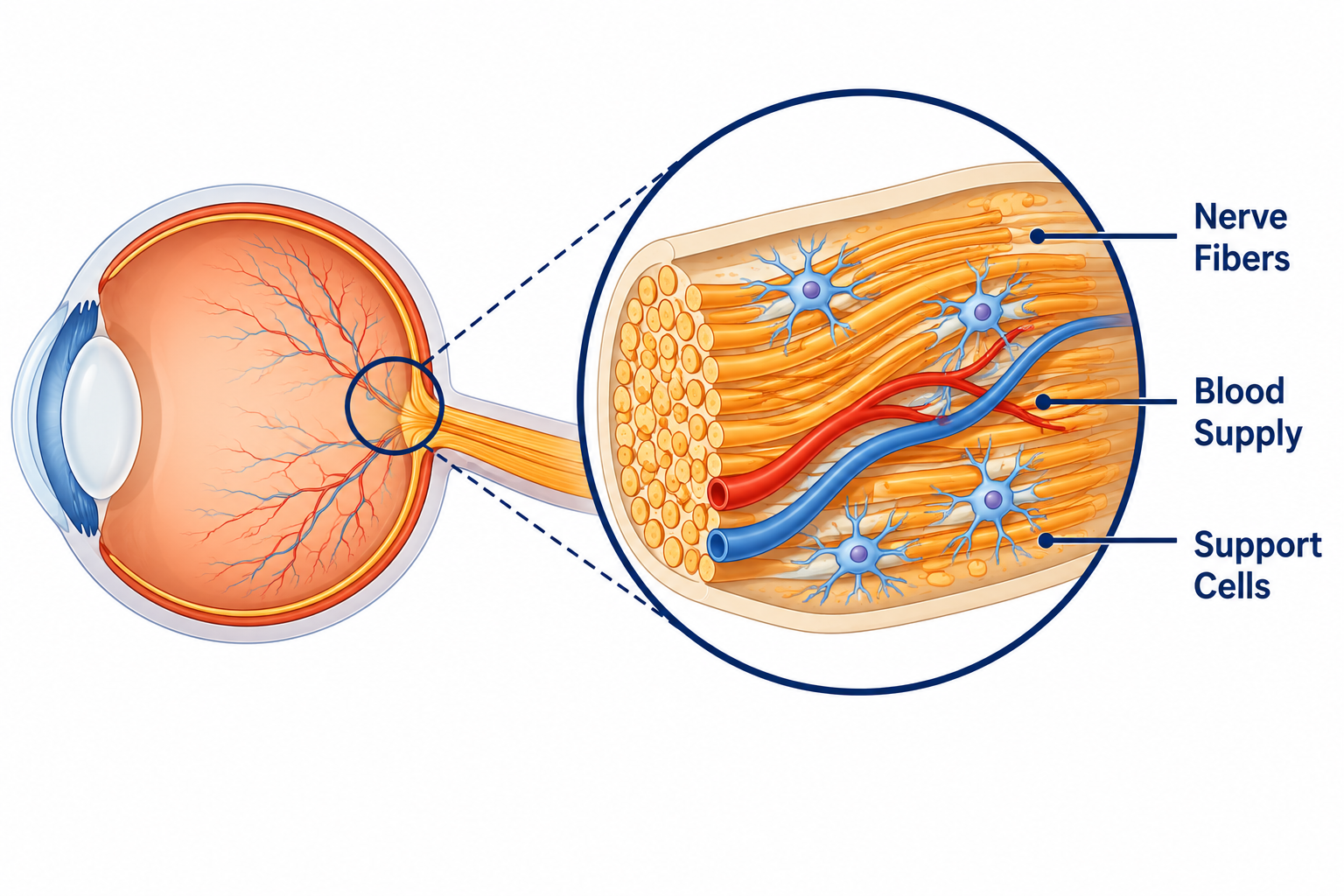
The optic nerve contains living nerve fibers supported by blood vessels and specialized support cells.
The Traditional Chinese Medicine (TCM) Perspective on Glaucoma
Traditional Chinese Medicine has described eye diseases for over two thousand years, not in terms of pressure or anatomy, but in terms of patterns of imbalance.
In TCM, the eyes are closely related to:
- The Liver system, which governs smooth flow and nourishment of the eyes
- The Kidney system, which supports long-term vitality and neural health
- Blood and Yin, which moisten and nourish delicate tissues
- Qi circulation, which ensures proper movement and perfusion
There are other patterns and organ systems that relate to the eyes in TCM but for the purposes of this blog I’m keeping it succinct. From this viewpoint, glaucoma is not a single disease, but a pattern-based condition. Two people with the same diagnosis may have very different underlying imbalances, and therefore respond best to different treatments.
This helps explain why a one-size-fits-all approach often falls short.
Where Acupuncture and Integrative Care Fit In:
Acupuncture and related therapies are not intended to replace eye drops or surgery. Instead, they aim to:
- Support healthy blood flow to the eyes and brain
- Regulate the autonomic nervous system
- Reduce inflammatory signaling
- Improve neurovascular coordination
- Support the body’s adaptive capacity over time
Emerging research and our clinical observations suggest that acupuncture can influence mechanisms highly relevant to glaucoma progression, including cerebral blood flow, autonomic balance, and inflammatory markers.6, 7
When thoughtfully integrated, these approaches may help optimize the environment in which the optic nerve survives and functions.
A Collaborative Model of Care
A Complementary Holistic Approach to Glaucoma
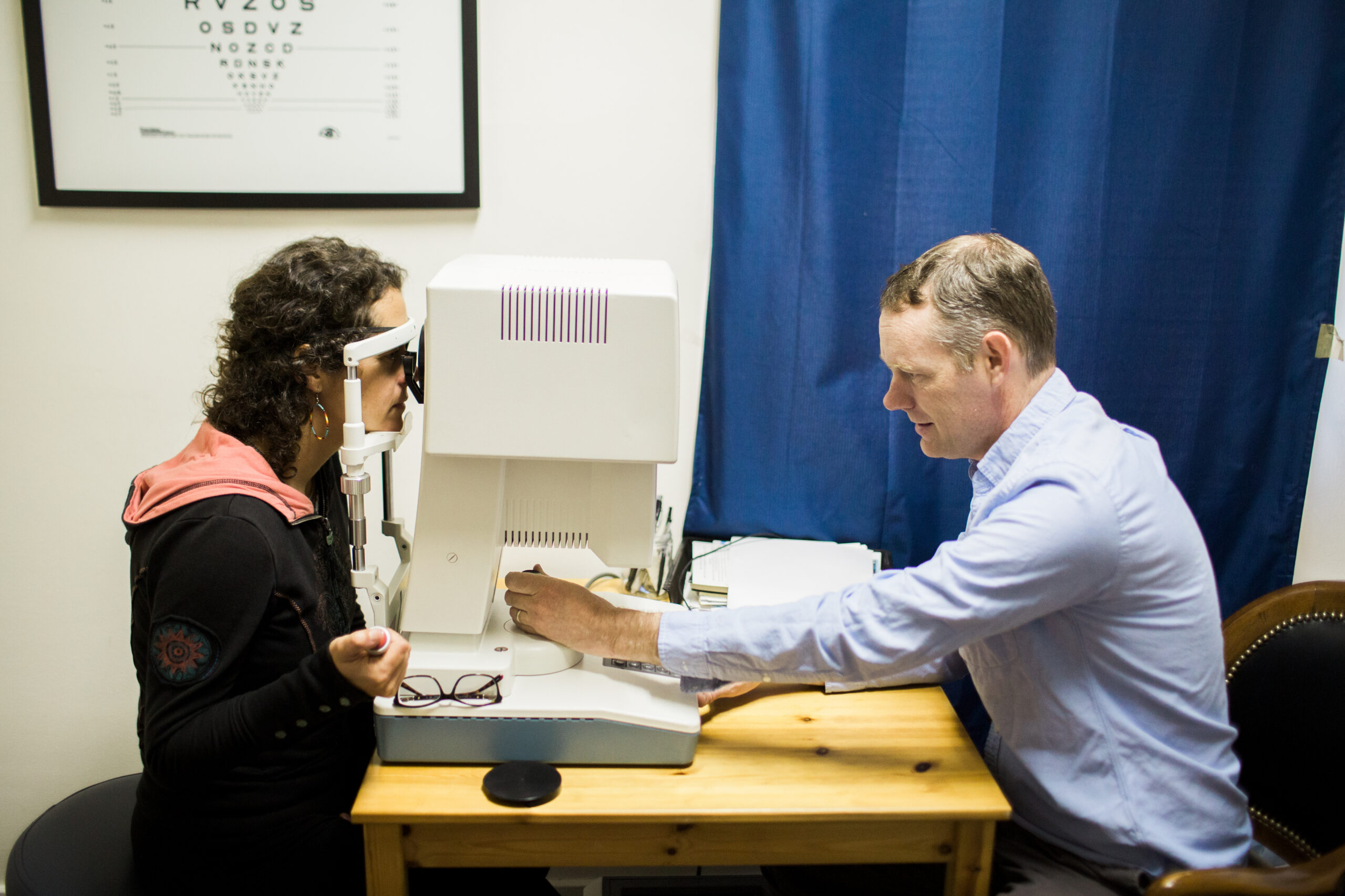
Acupuncture and integrative care are designed to complement ongoing care with your ophthalmologist.
At Russell Family Acupuncture, we strongly encourage patients to maintain regular care with their ophthalmologist. Glaucoma is a condition that requires monitoring, measurements, and teamwork.
We support you from a holistic perspective, including circulation, nervous system regulation, metabolic health, and constitutional patterns that are often overlooked yet deeply influential.
This integrative model is especially valuable for patients in Marin County, Sonoma County, and the greater Petaluma area who are seeking a more complete, whole-person approach to preserving their vision.
Key Takeaways
- Glaucoma is a neurodegenerative disease affecting the optic nerve, not just a pressure issue
- Retinal ganglion cells are vulnerable to blood flow, metabolic stress, and inflammation
- Lowering eye pressure remains essential, but does not explain all cases where glaucoma progresses.
Integrative approaches may support circulation, nervous system balance, and overall optic nerve health.
Looking Ahead
This article is the first in a series about glaucoma and a holistic treatment. In future articles, we’ll explore:
- How acupuncture may support optic nerve health
- Nutrition and supplements with research behind them
- Chinese and Western herbal strategies
- Low-tension glaucoma and blood-flow issues
- Eye exercises, stress reduction, and daily habits that matter
If you or a loved one has been diagnosed with glaucoma, know this:
There is often more that can be done than simply watching the visual field get worse.
Feel free to contact us to find out whether holistic eye treatment may be a good fit for you.
Frequently Asked Questions
Is glaucoma only caused by high eye pressure?
No. While elevated pressure is a major risk factor for glaucoma, many people develop glaucoma with normal pressure due to vascular and metabolic factors.
What is normal-tension glaucoma?
A form of glaucoma where optic nerve damage occurs despite normal intraocular pressure levels.
Can improving blood flow help glaucoma?
Research suggests that ocular blood flow plays an important role in optic nerve health and disease progression.
Can acupuncture help glaucoma?
Acupuncture supports circulation, autonomic balance, and inflammatory regulation, but it does not replace standard medical care.
References
- Weinreb RN, Aung T, Medeiros FA. The pathophysiology and treatment of glaucoma. JAMA.
- Gupta N, Yücel YH. Glaucoma as a neurodegenerative disease. Curr Opin Ophthalmol.
- Flammer J et al. The role of ocular blood flow in glaucoma. Prog Retin Eye Res.
- Osborne NN et al. Retinal ischemia: mechanisms of damage and potential therapeutic strategies. Prog Retin Eye Res.
- Leske MC et al. Risk factors for incident open-angle glaucoma. Ophthalmology.
- Leszczynska A, Ramm L, Spoerl E, Pillunat LE, Terai N. The short-term effect of acupuncture on different ocular blood flow parameters in patients with primary open-angle glaucoma: a randomized, clinical study. Clin Ophthalmol. 2018 Jul 19;12:1285-1291.
- Chen SY, Yieh FS, Wu PY, Chiang SY, Hsieh CL. Efficacy and safety of acupuncture in slowing visual field loss in normal-tension glaucoma: A 24-week randomized controlled trial. Complement Ther Med. 2026 Jun;98:103363.